

- You have no items in your shopping cart
- Subtotal (price): HKD 0

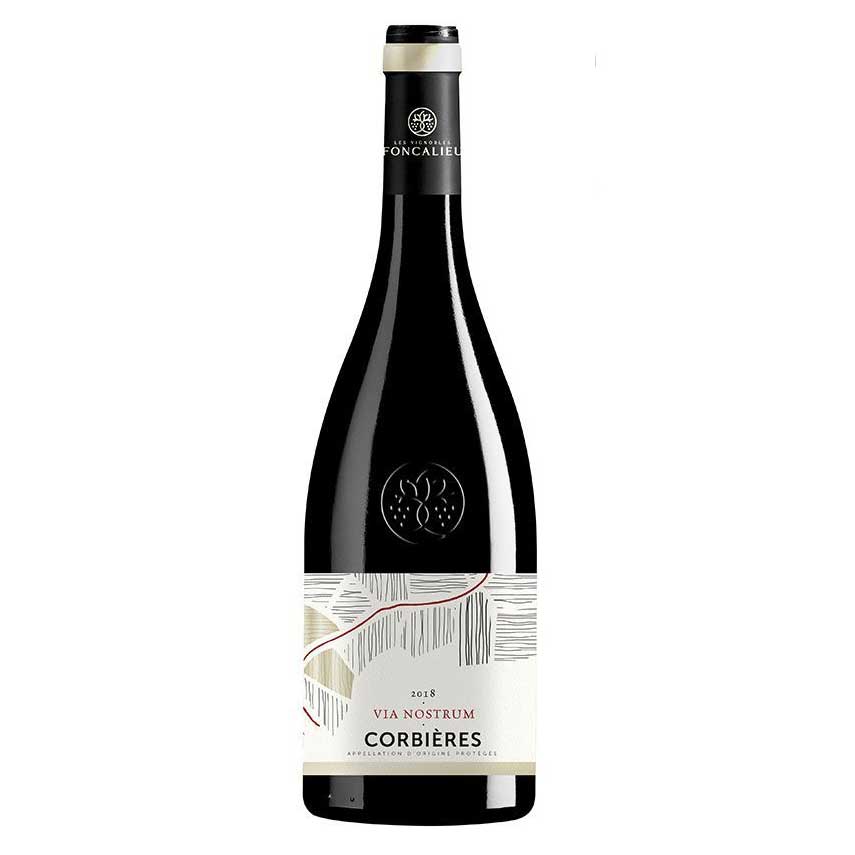
Via Nostrum, Corbieres, 2019
This terroir is crossed by a Roman road called :Via Domitia. It is an integral part of the history of our region. Our Languedoc appellations thus intersect.
Via Nostrum is our interpretation of this legendary historic route through the vineyard and the plots.
Grape Varieties: 70% Syrah, 30% Grenache
Soil / Terroir: Plot located near Thézan des Corbières, facing the Pinada limestone massif. Hilly terrain composed of marl, sandstone and limestone. Hot and dry Mediterranean climate.
Tasting Notes: At first, on the nose, This wine reveals a frank and pleasant nose of red fruits and spices. Then, the mouth presents a beautiful structure of velvet. Indeed its elegance and its force balance each other perfectly. Overall you will enjoy a dominant of black fruits with toasted, cocoa and vanilla notes.
Food Pairing Recommendations: Enjoy Via Nostrum, Corbieres wine with grilled red meat, game or characterful cheeses. Serve at room temperature, 16°C.
Ageing potential: 5 years
Despite a history full of ups and downs, today the Corbières AOC wine growing area is France’s fourth largest appellation by volume. It mainly produces rich, spicy reds.
Originally planted by the Greeks and developed by the Romans, since the 2nd century BC you can find grapes in the area.
In 1985, Corbières receive the AOC label. The appellation area covers a mosaic of very diverse soils (schist, sandstone, limestone, marl…).
It enjoys a Mediterranean climate tempered by a maritime influence to the west. Importantly, the tramontane, a strong local wind, helps dry the vines and prevent disease.you can find several terroir in this appellation which are: Hautes-Corbières, Corbières-Méditerranée, Corbières centrales and Corbières d’Alaric.
Last but not least, the Corbières AOC produces mainly red wines (85%), but also rosés (12%) and whites (3%).
It is the fourth largest French appellation by volume (and the largest in Languedoc).
The main grape varieties used for the reds are: Carignan (THE Corbières grape, which gives them their typical structure and tannic intensity), Grenache Noir, Lledoner Pelut, Mourvèdre and Syrah.



Enjoy 10% OFF on any catering over 5000 HKD purchase Enter Voucher code: OCTCATERING 10
Enjoy 15% OFF on wine for any purchase over 2000 HKD Enter Voucher code: OCTWINE15
Offer valid until November 15th only on our website exclusively.
2025年11月15日前
任何"到會食物"訂單只要滿HKD5000 即可享有9折優惠(只需輸入優惠碼OCTCATERING10)
所有"葡萄酒"消費滿HKD2000 即可享85折優惠(需輸入折扣碼"octwine15")